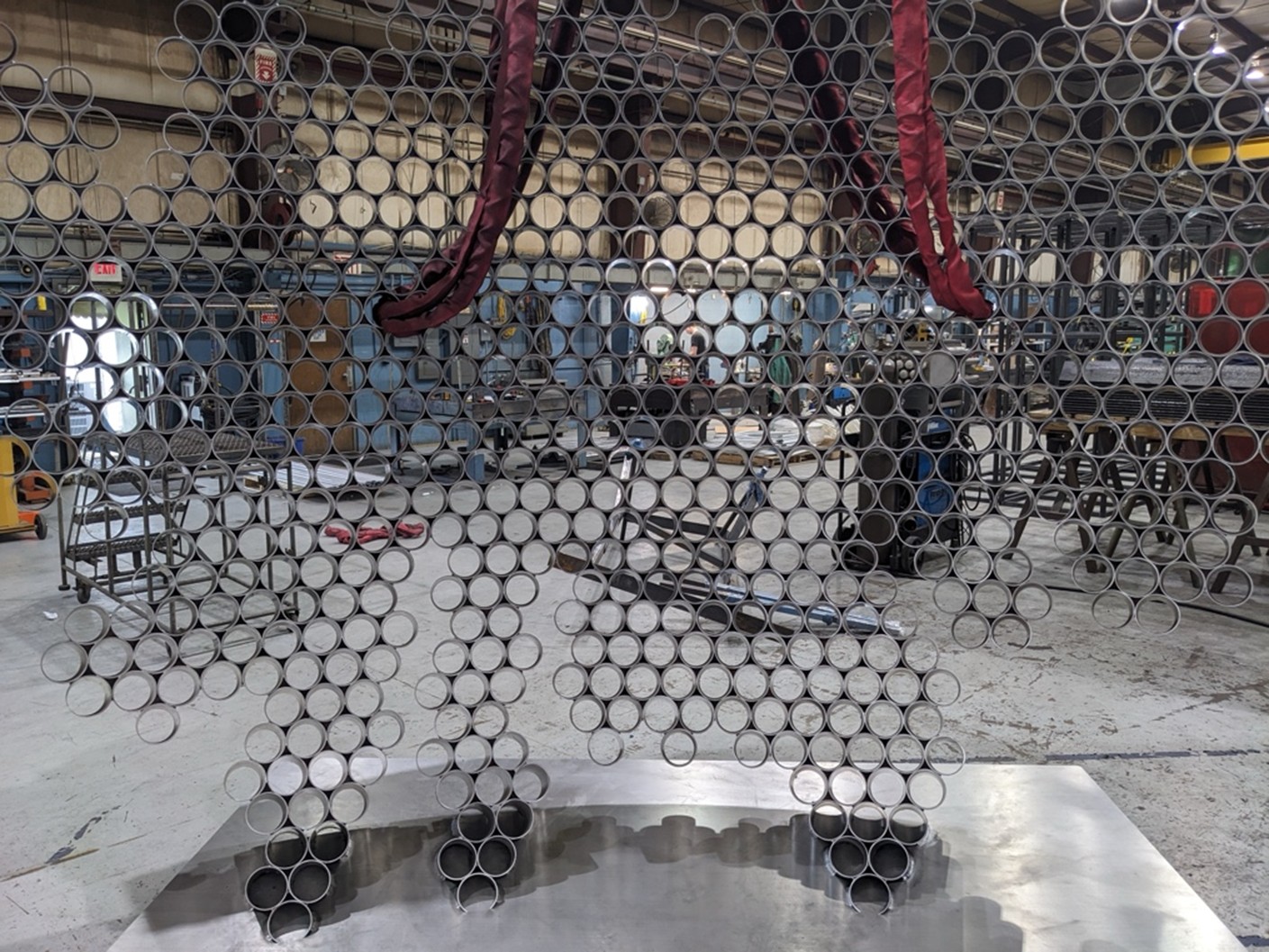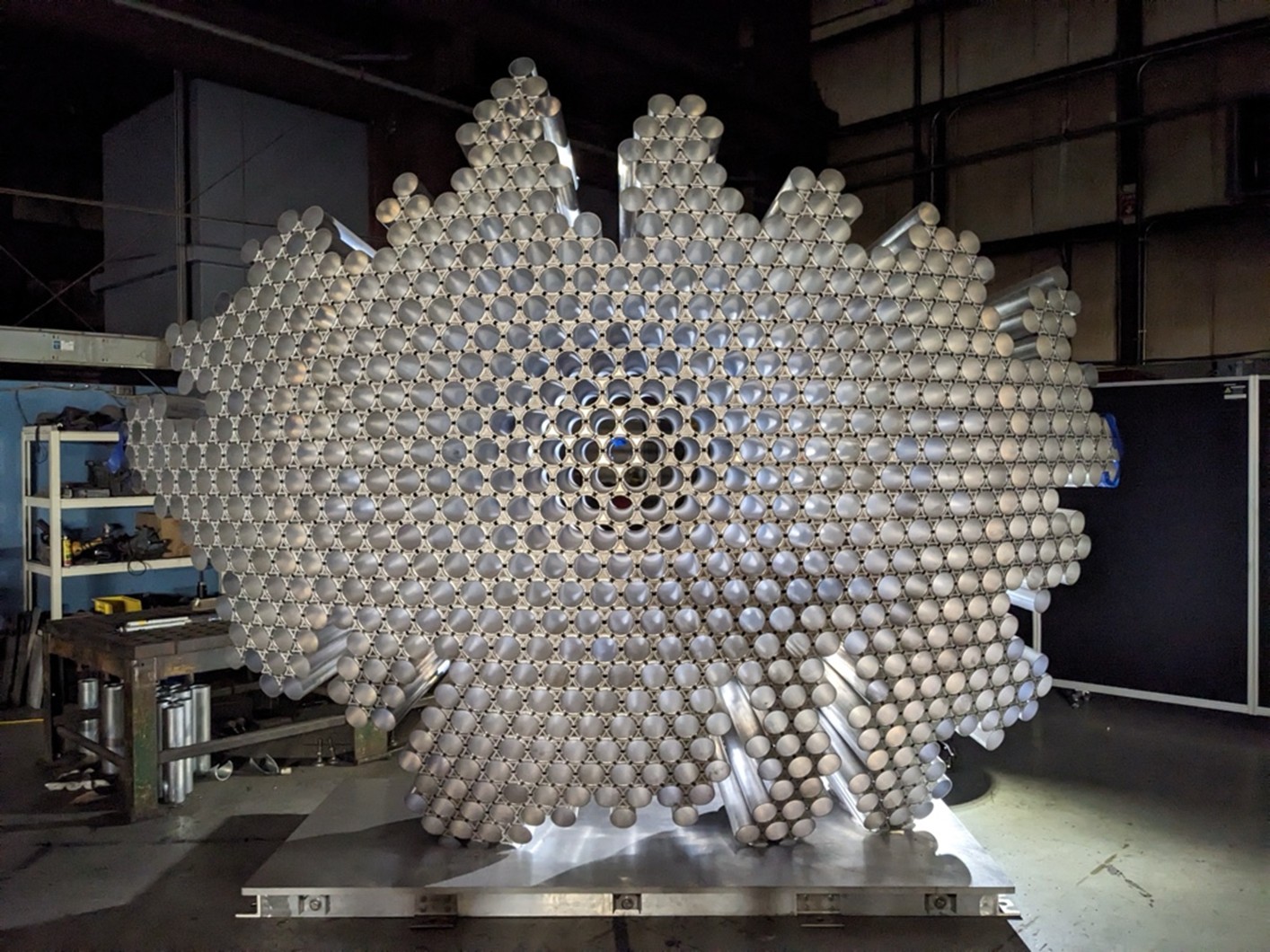
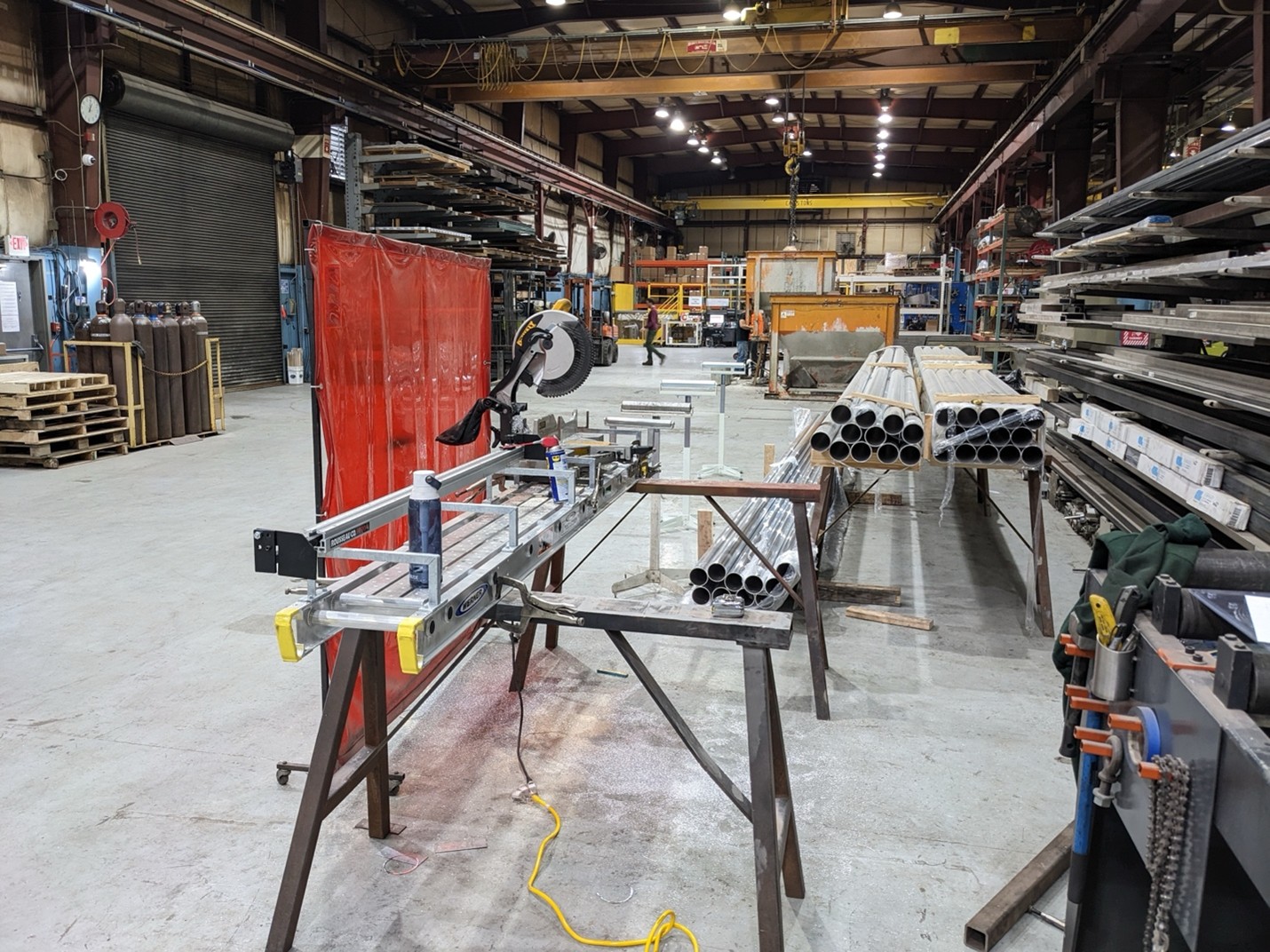
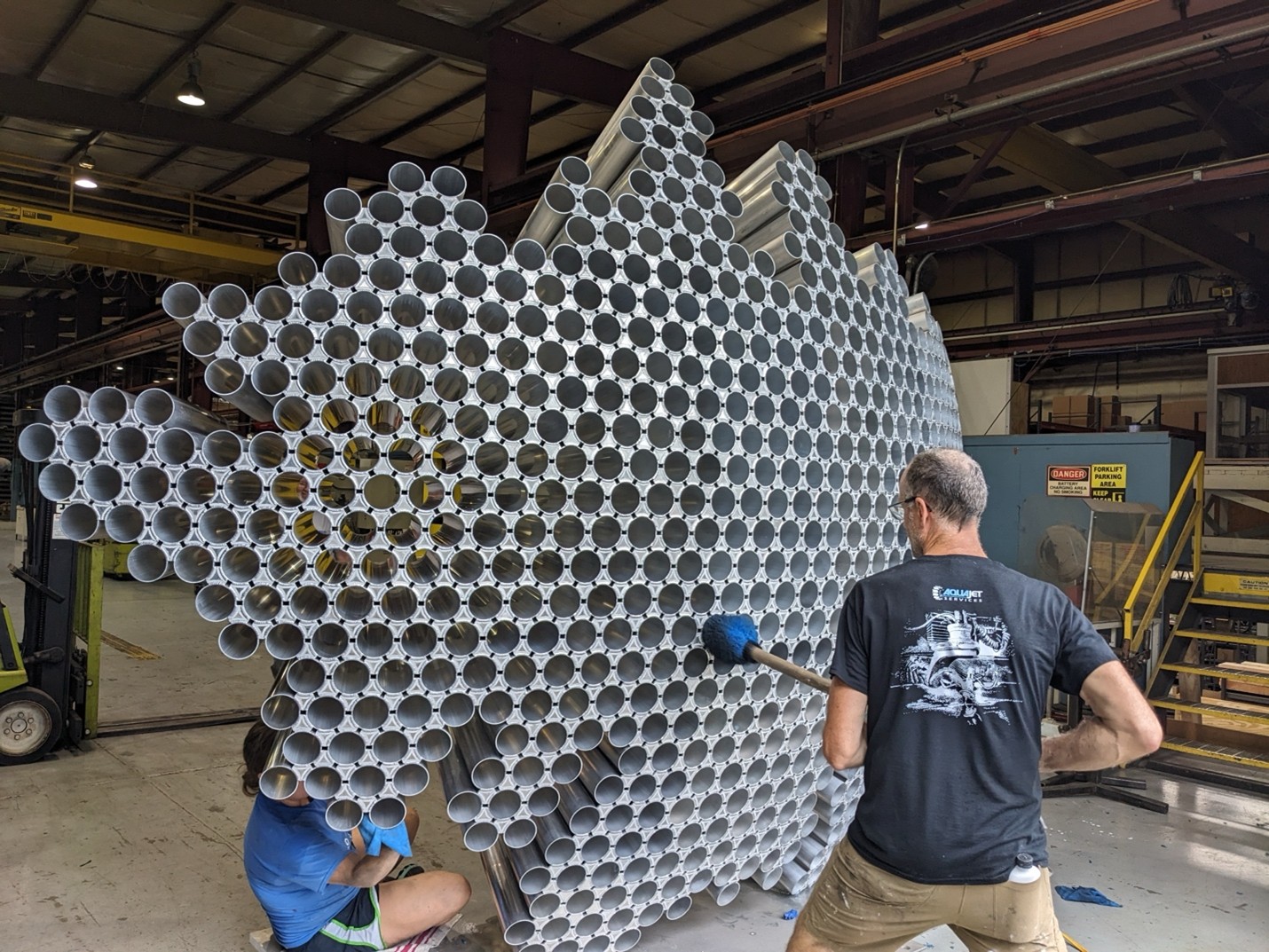
We again had the honor of working with Emil Lukas, an artist from Stockerton, PA, on one of his trademark tube sculptures. These see-through aluminum sculptures create a distinctive lensing effect. We love seeing Emil’s artistic vision come to life through these challenging projects.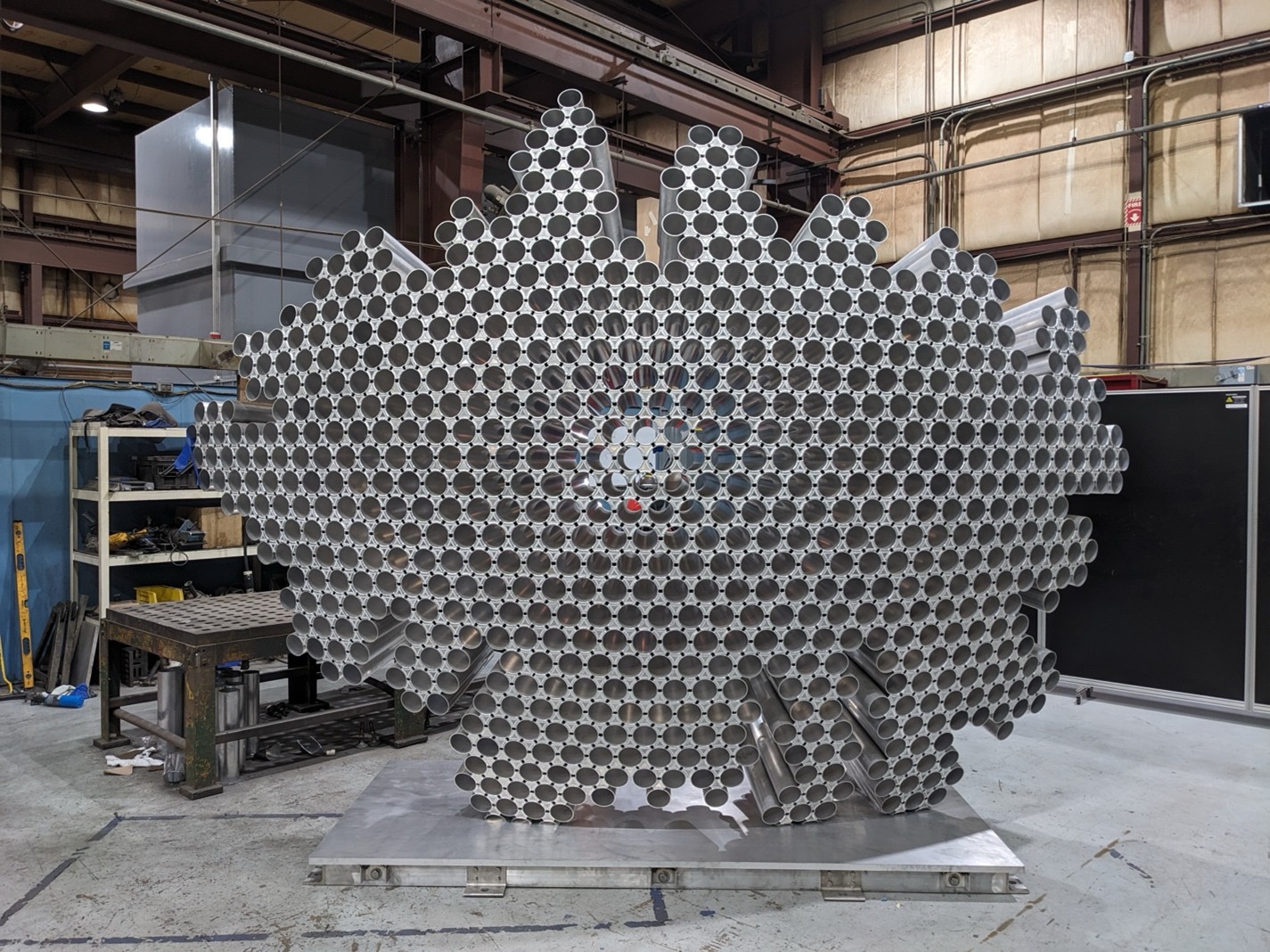 Here’s how Emil’s tube sculptures work. Aluminum tubes are first cut to equal lengths, then welded together. The tubes are touching in the back of the sculpture and spaced apart in the front with waterjet-cut spacers.
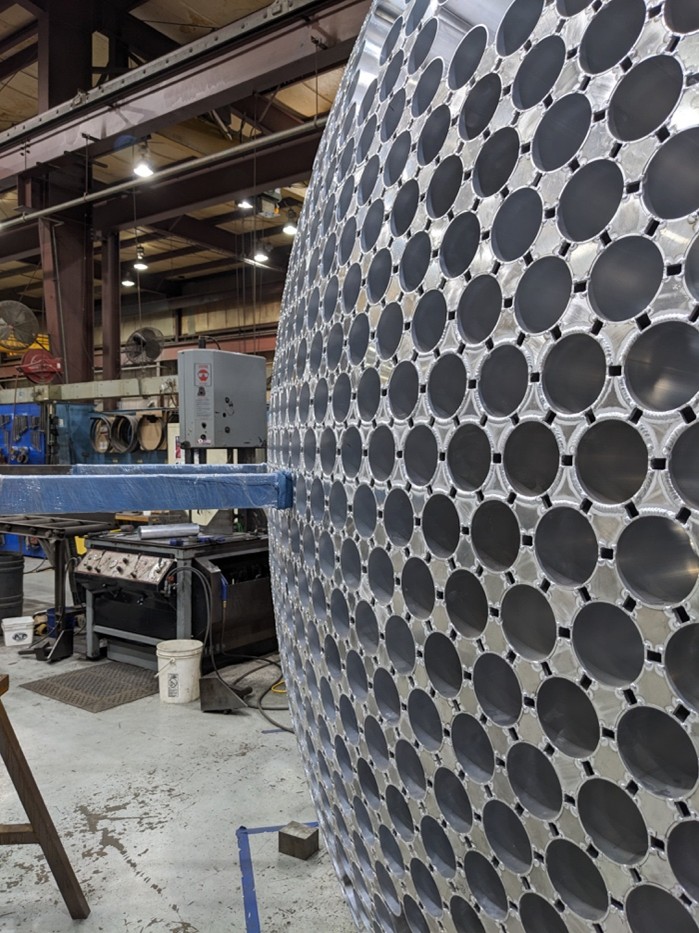
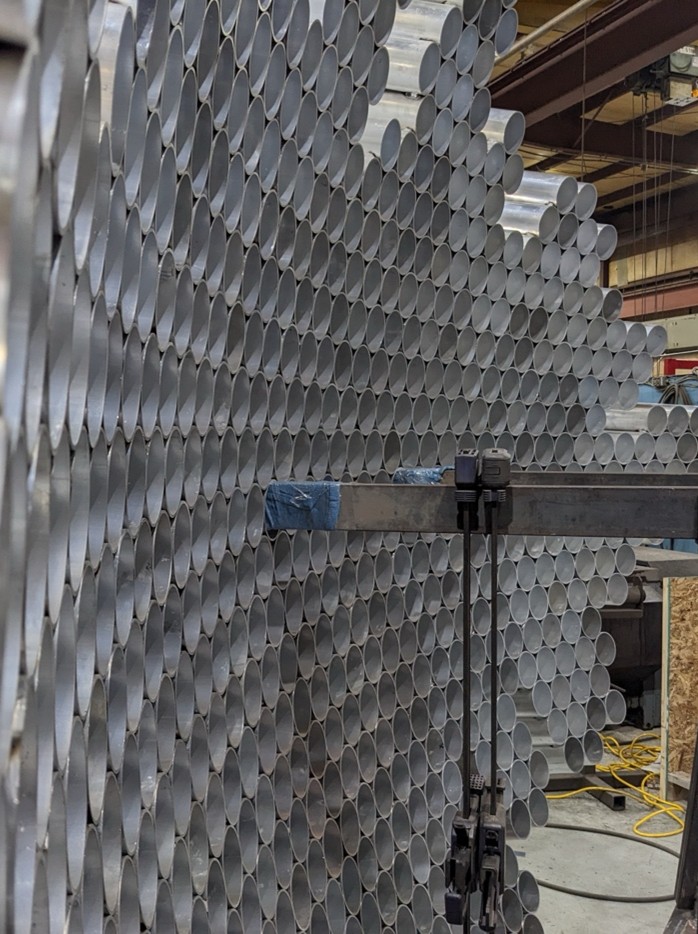
This arrangement creates a spherical shape, with the center axis of each tube converging on single point—the focal point of the radius. The result is a large lens that produces incredible optical effects.
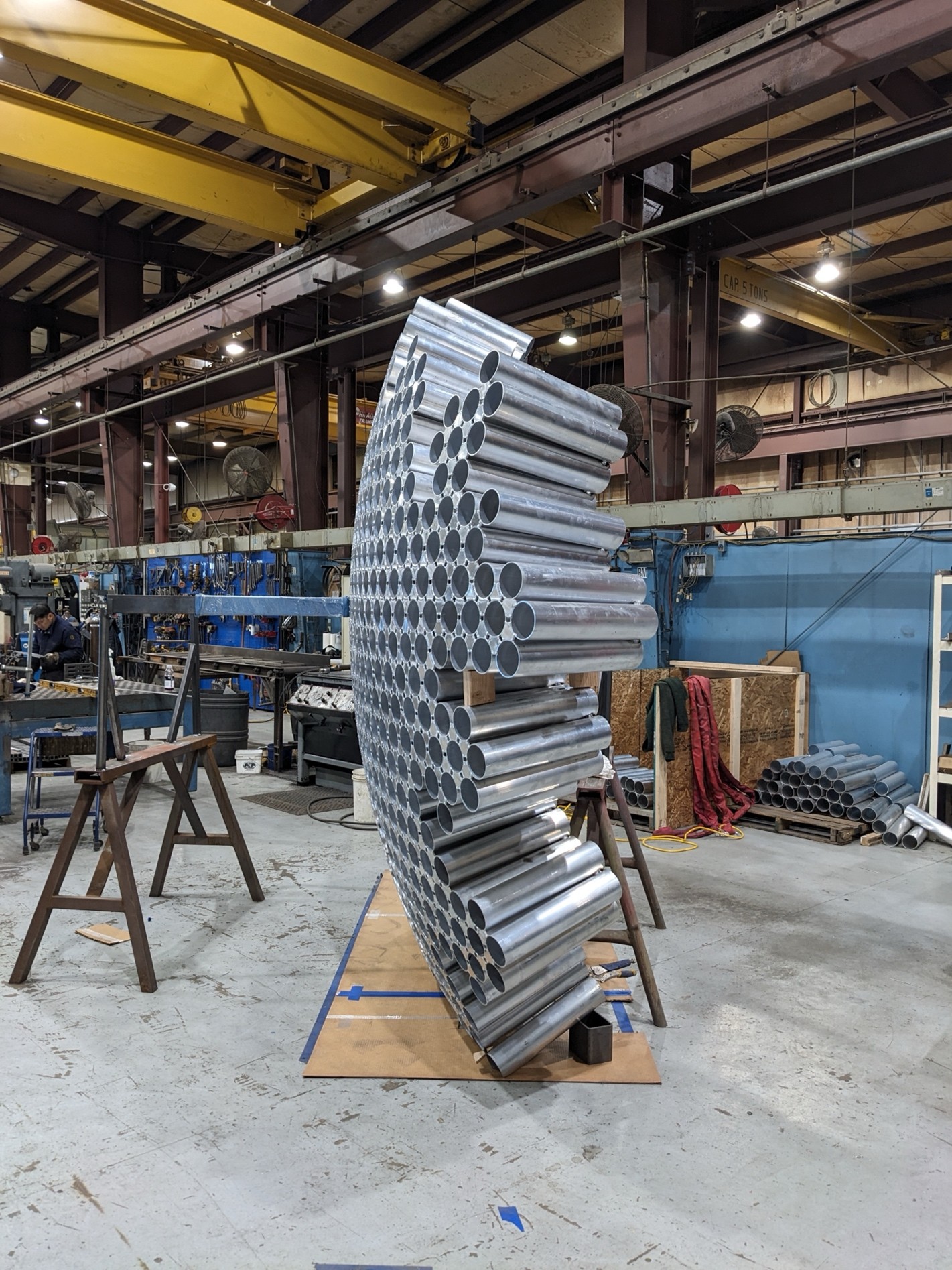
From the front (convex) side, the sculpture is mostly just an opaque, spherical wall. However, you can see through a small cluster of tubes which concentrate on the inner focal point. This see-through cluster shifts as you move, like an eye that follows you.
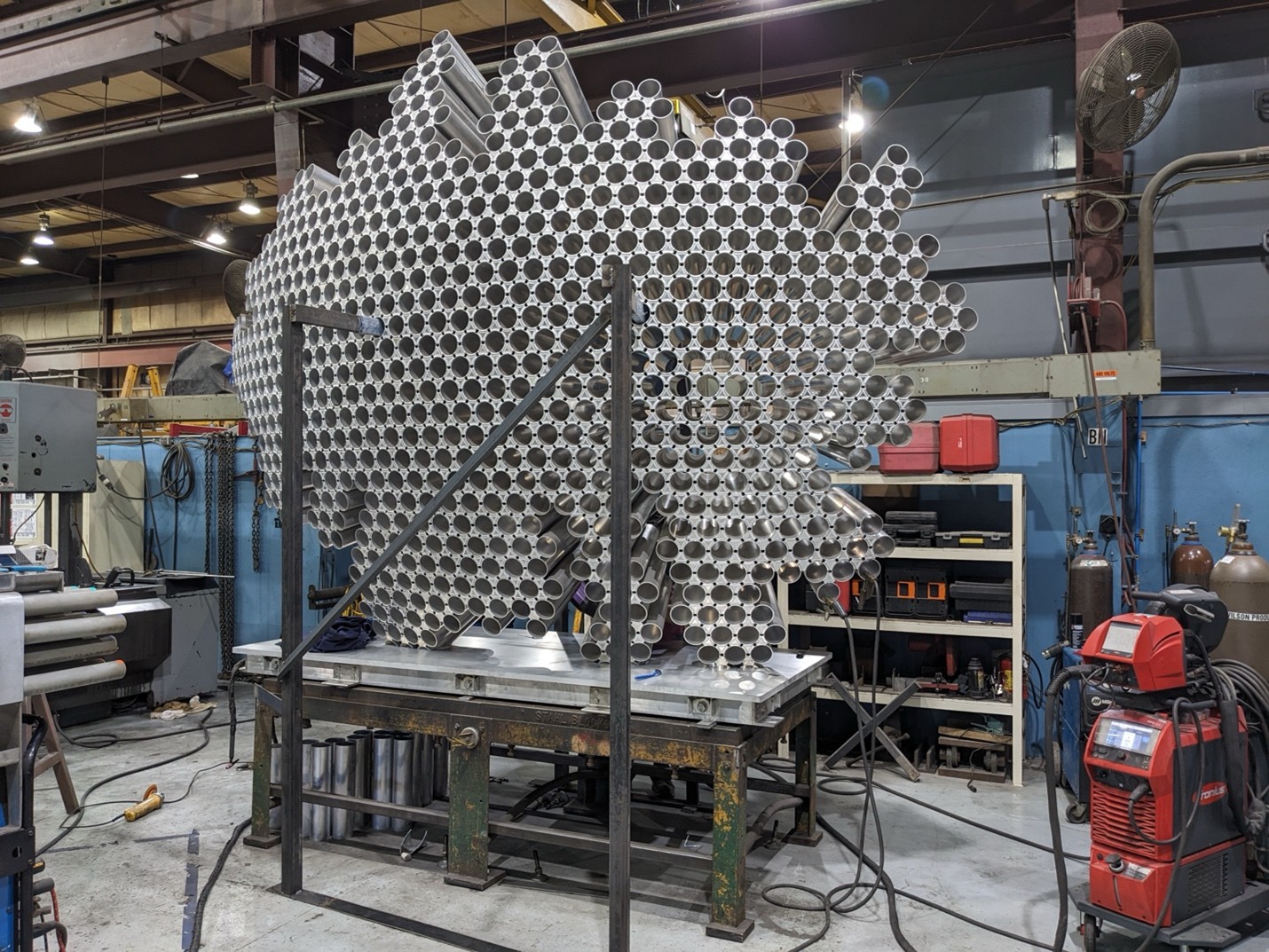
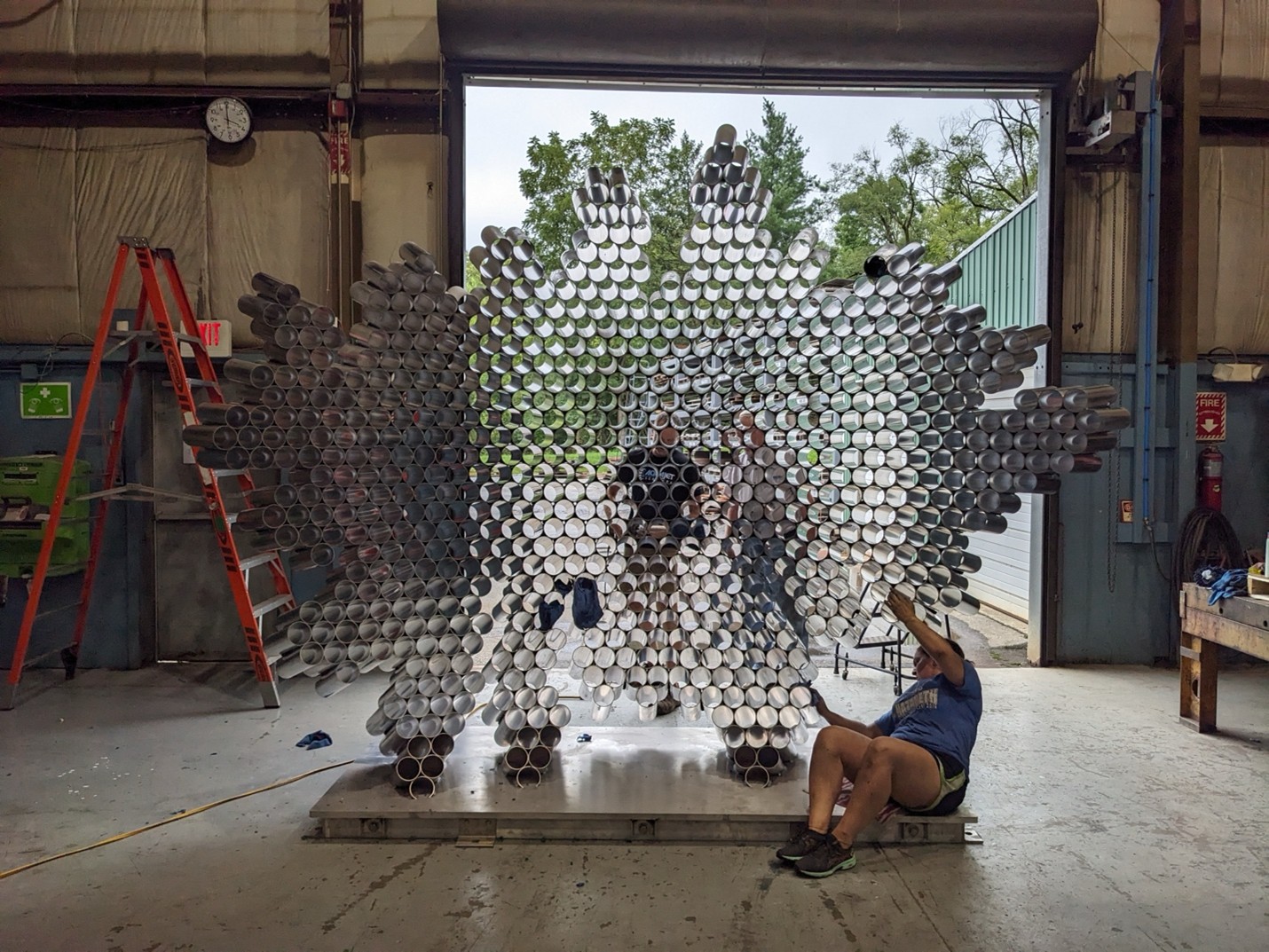
The sculpture provides an entirely different effect from the back (concave) side. From the focal point (5’ from the ground and 9’ behind the sculpture on this one), you can see through all the tubes at once and the sculpture becomes almost invisible. The image you see is somewhat pixelated but completely intact.
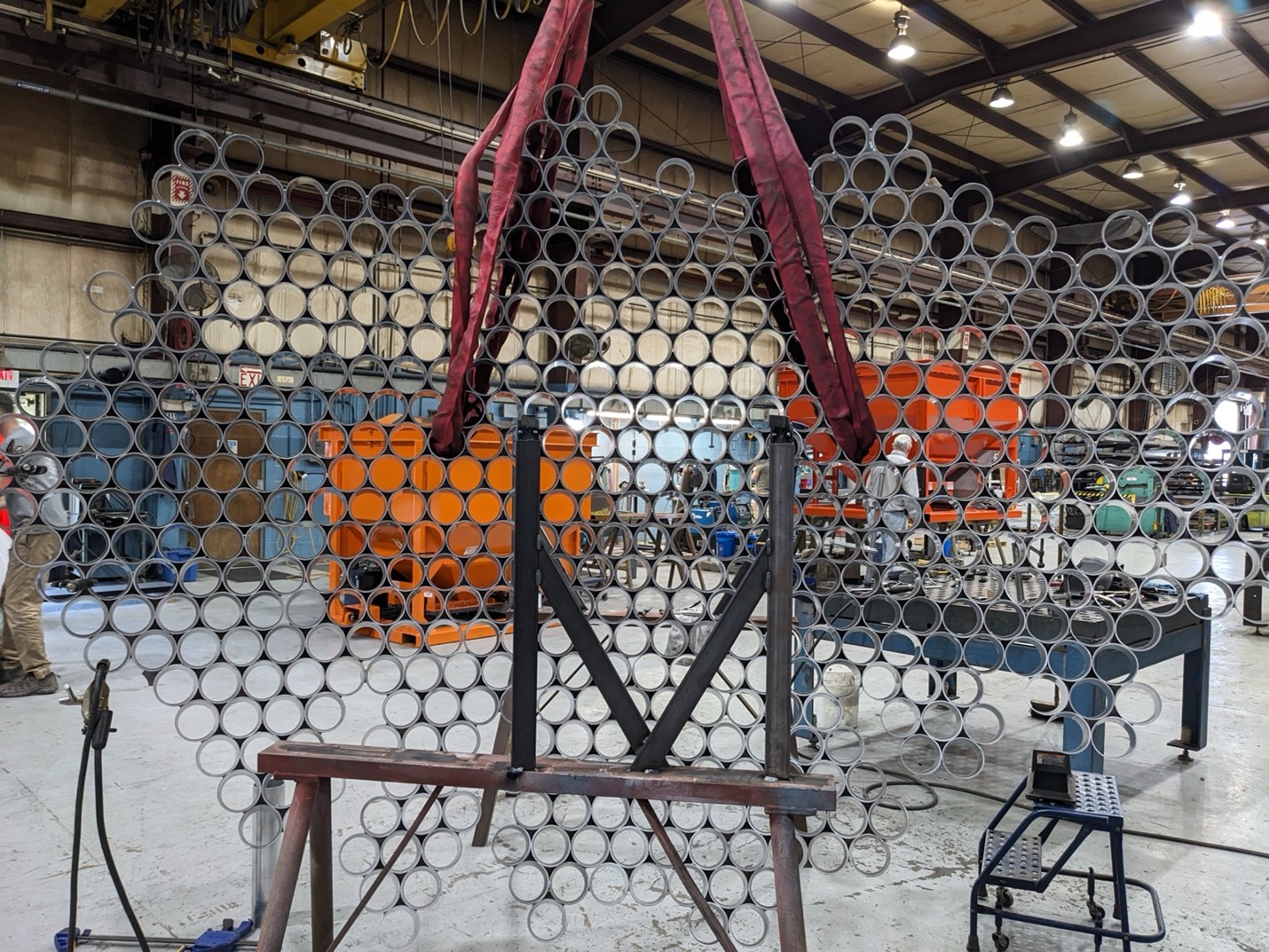
The polished interior of each tube also reflects colors and shapes from the opposite side.
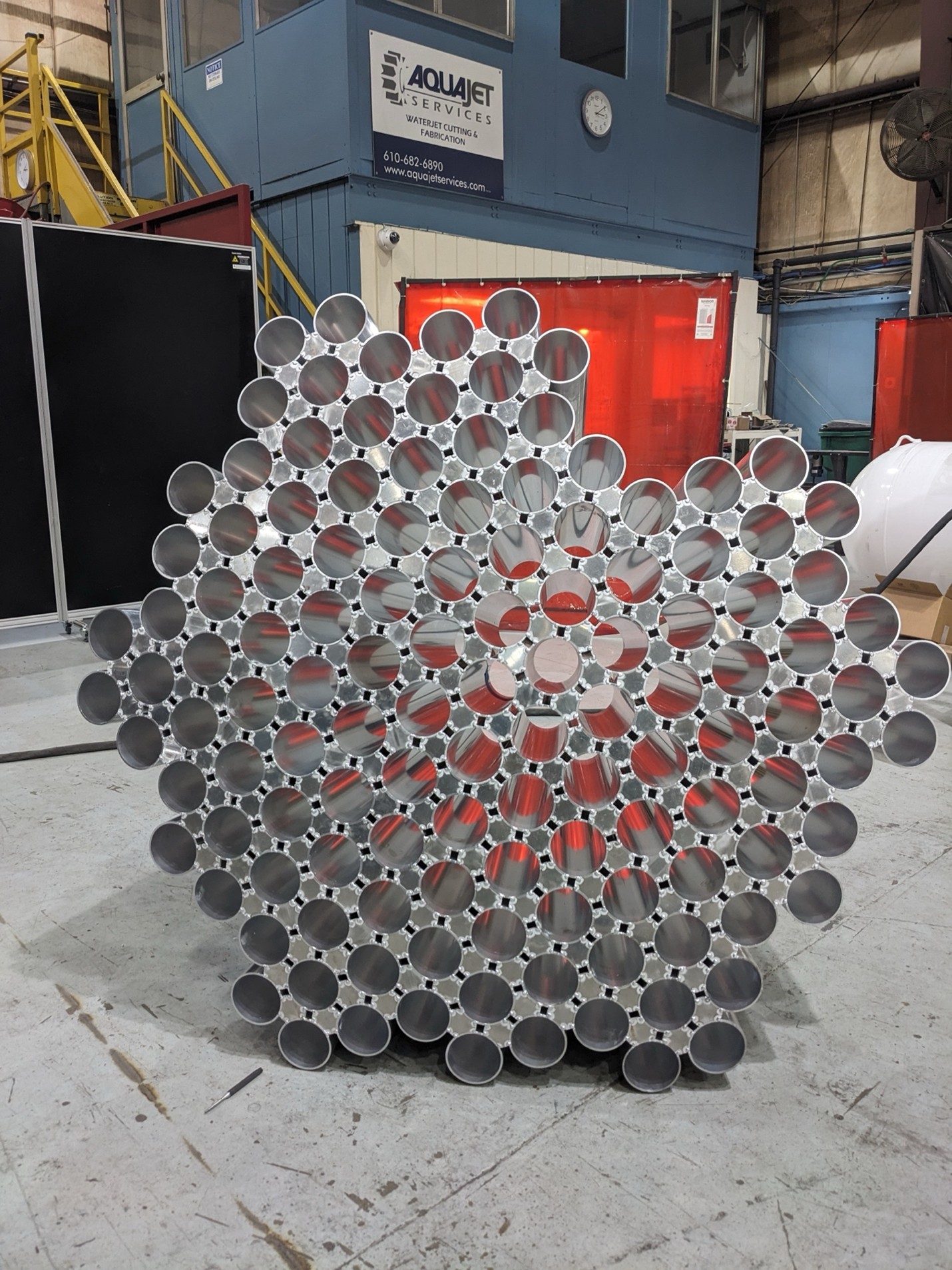
We’re admittedly biased, but the overall effect is really cool.
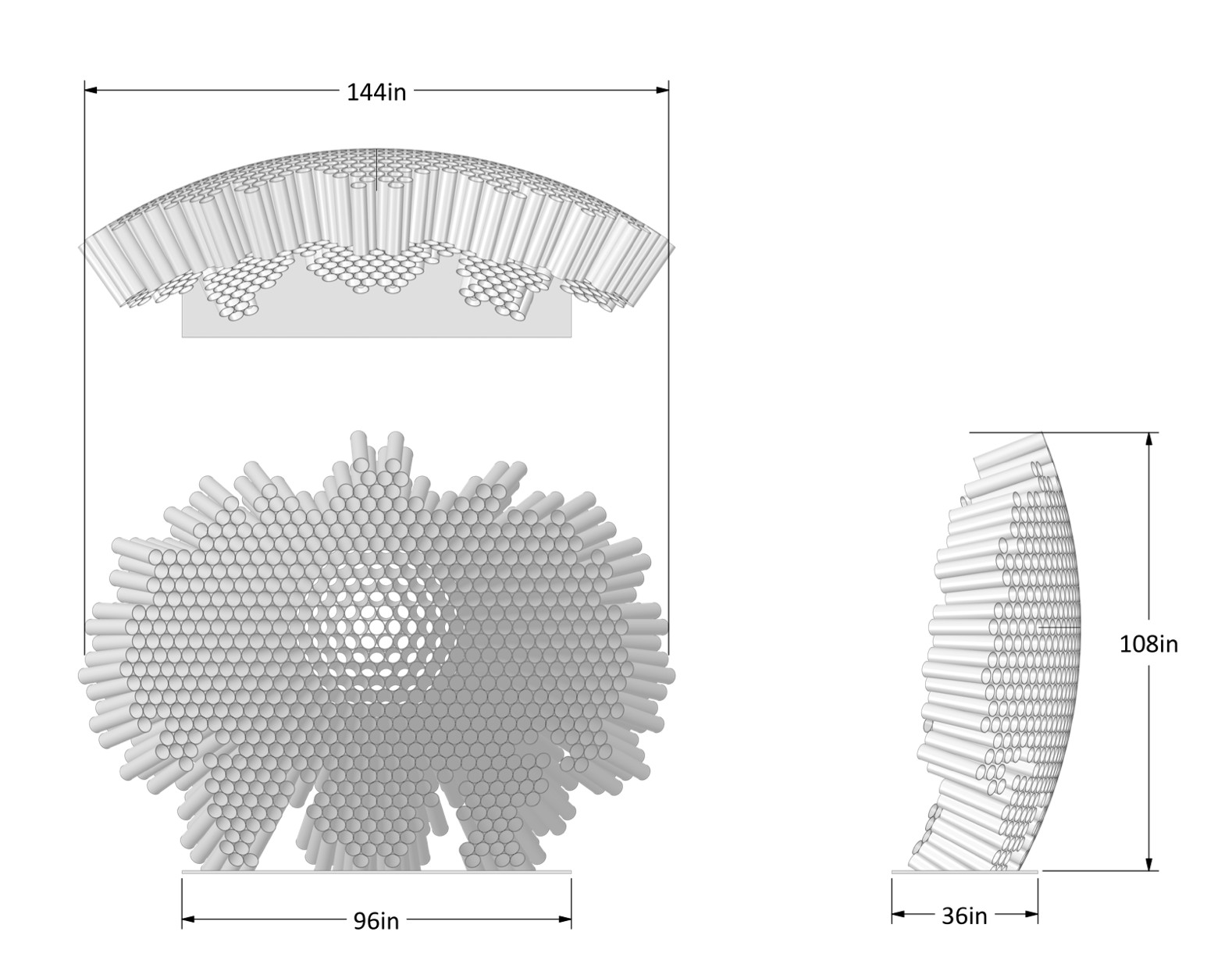
To start the fabrication process, we modeled a 3D mockup of the sculpture to clearly understand Emil’s vision and to give us solid measurements. Emil was, of course, the creative engine behind it all, and his plan called for a sculpture roughly 12’ wide and 9’ tall.
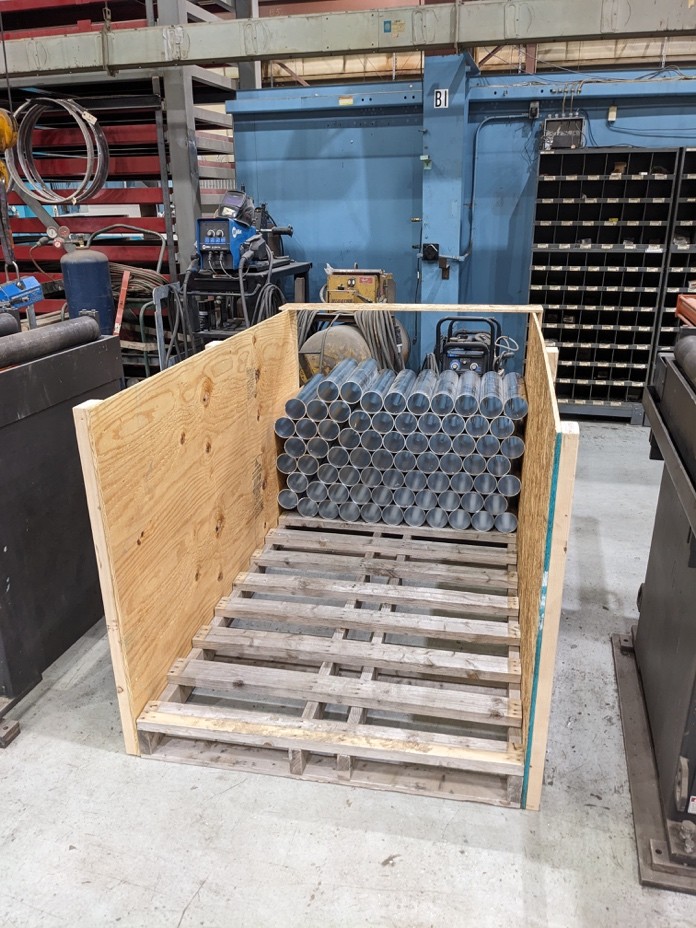
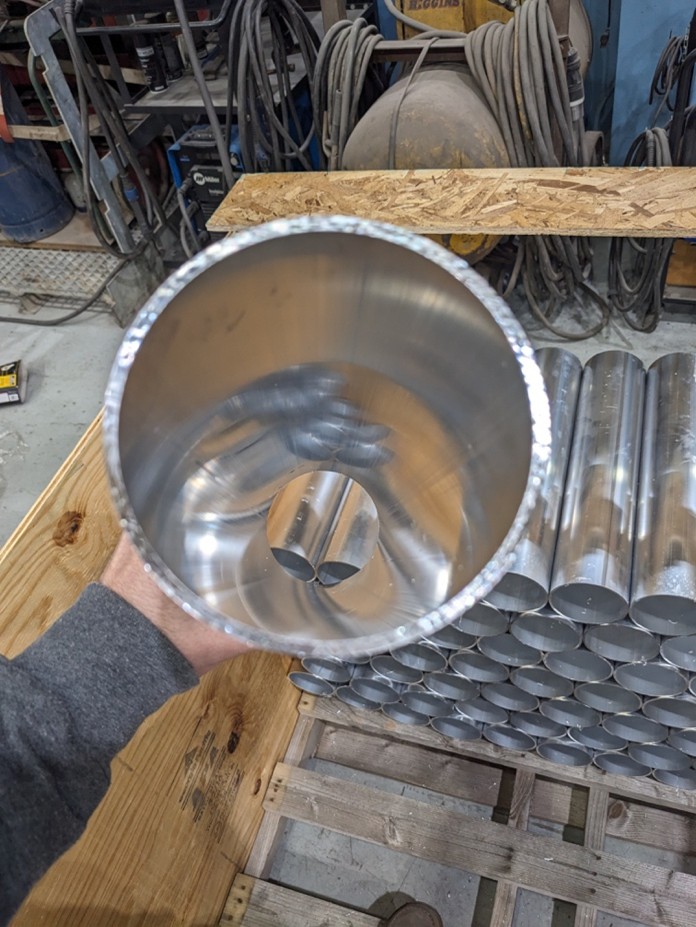
The tubes used for this sculpture were 4” in diameter with an 1/8” wall thickness. Each tube was cut to 18”.
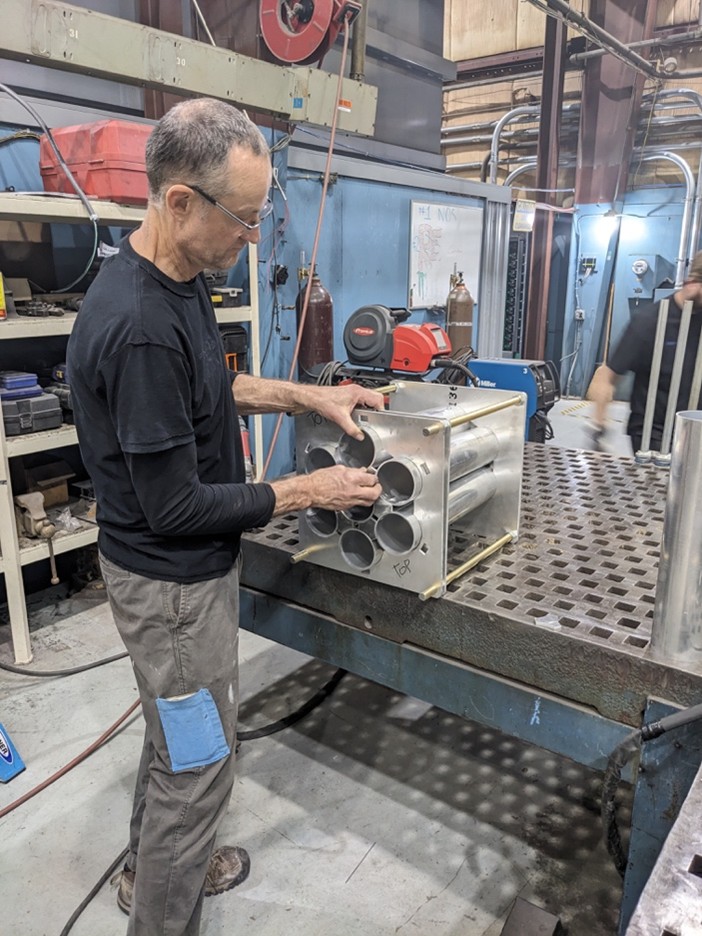
To simplify the build, we designed a custom fixture to hold 7 tubes in a cluster for TIG welding.
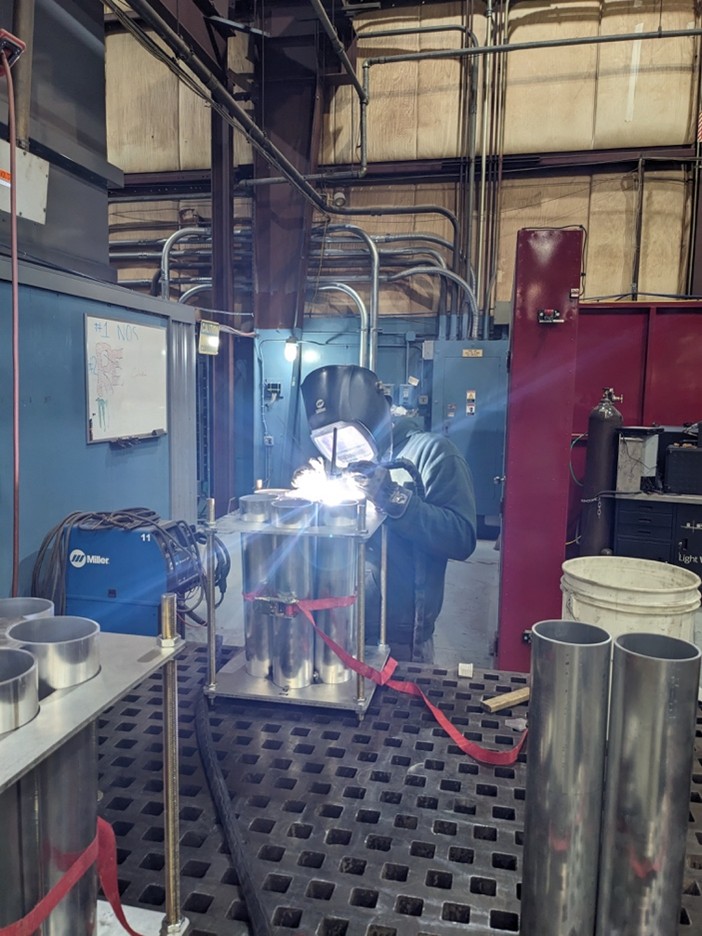
We then welded the 7-tube clusters together, with individual tubes filling gaps as needed.
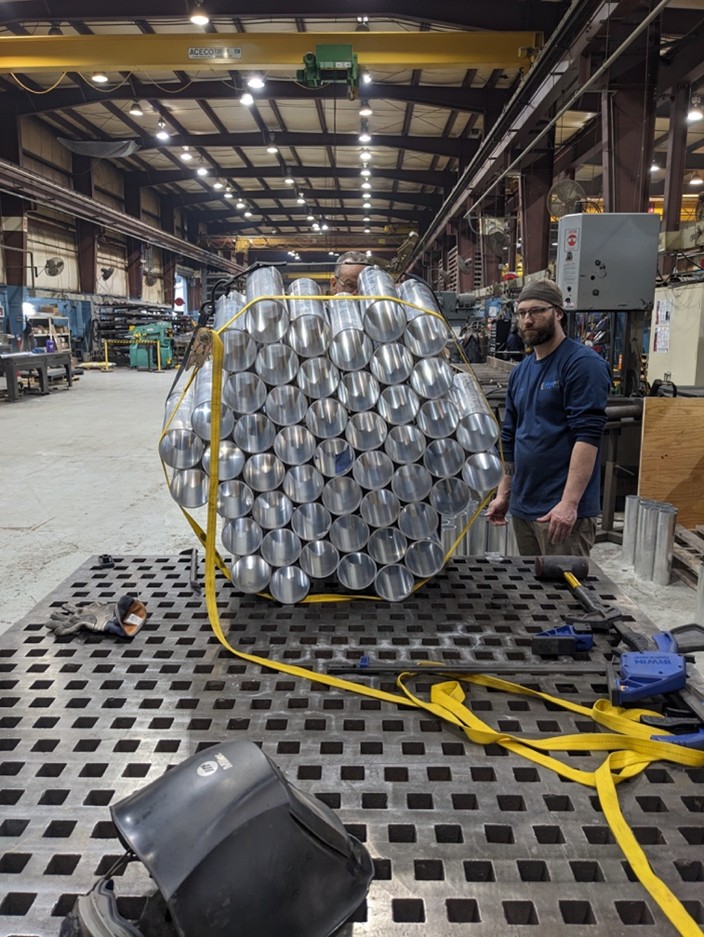
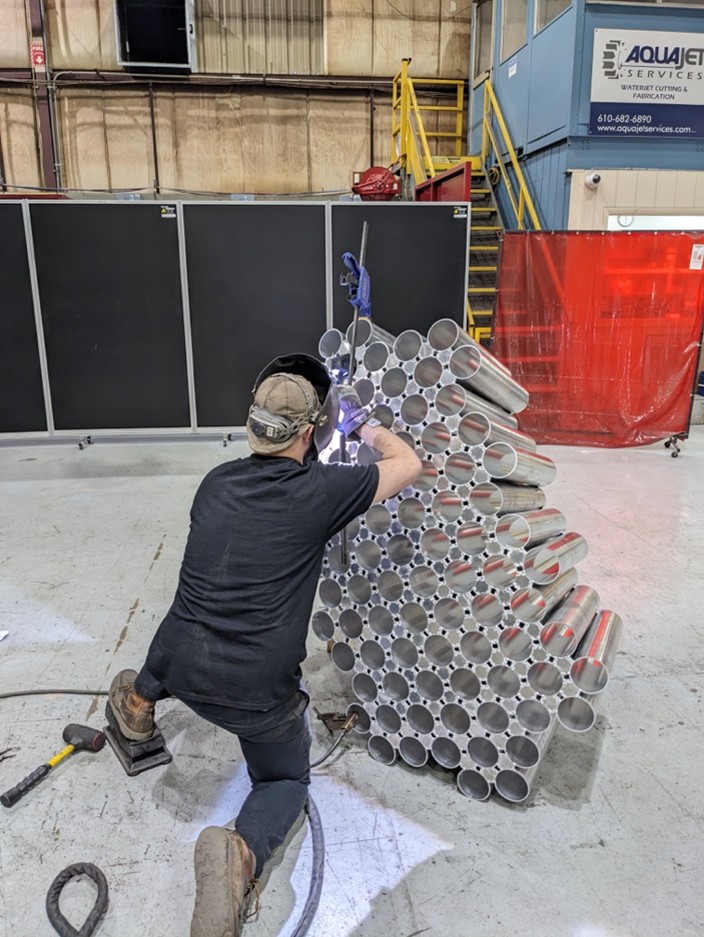
The sculpture slowly grew as cluster after cluster was added. Eventually it became too heavy and bulky to maneuver, so we mounted it on a stand for the rest of the build.
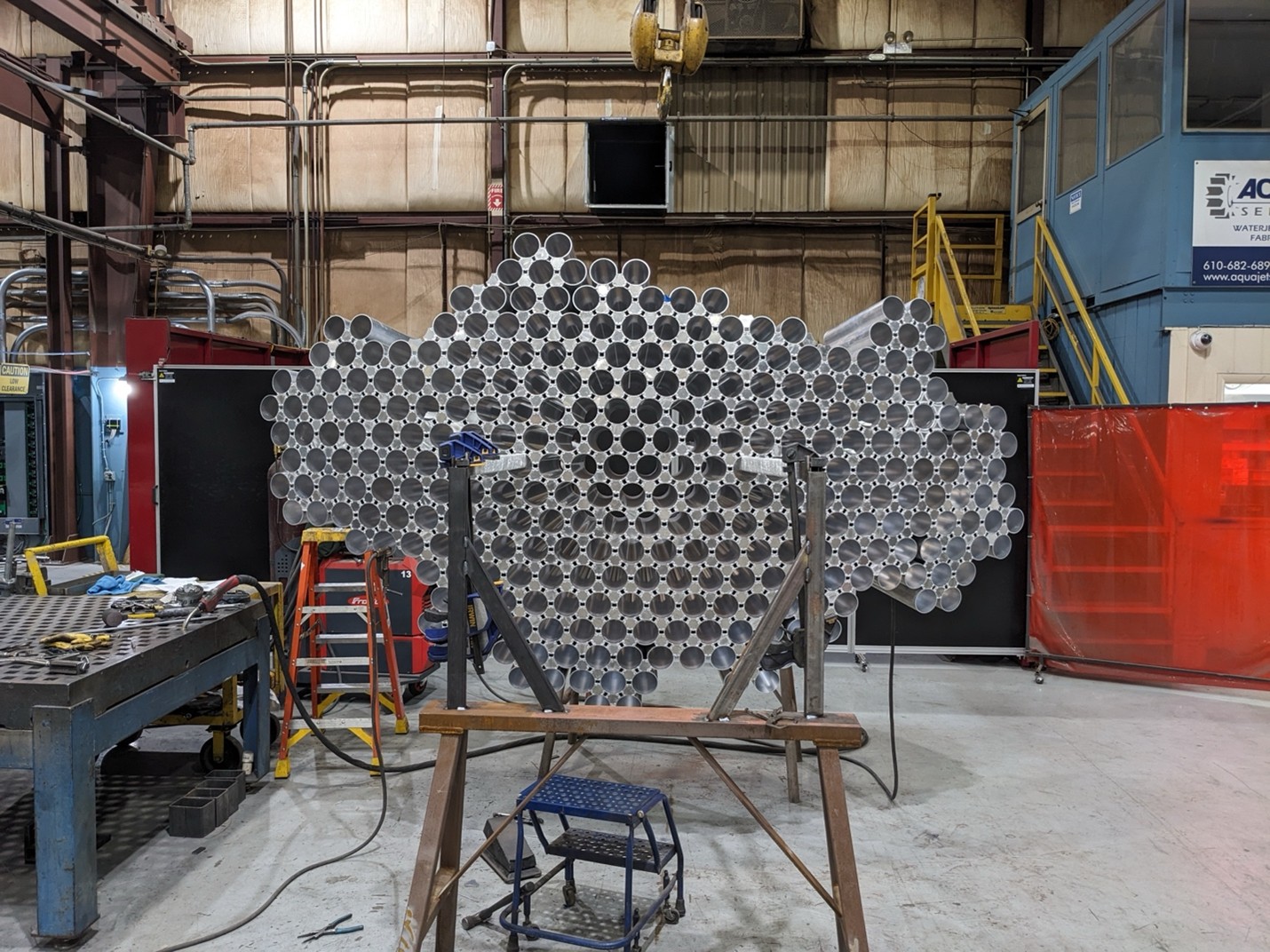
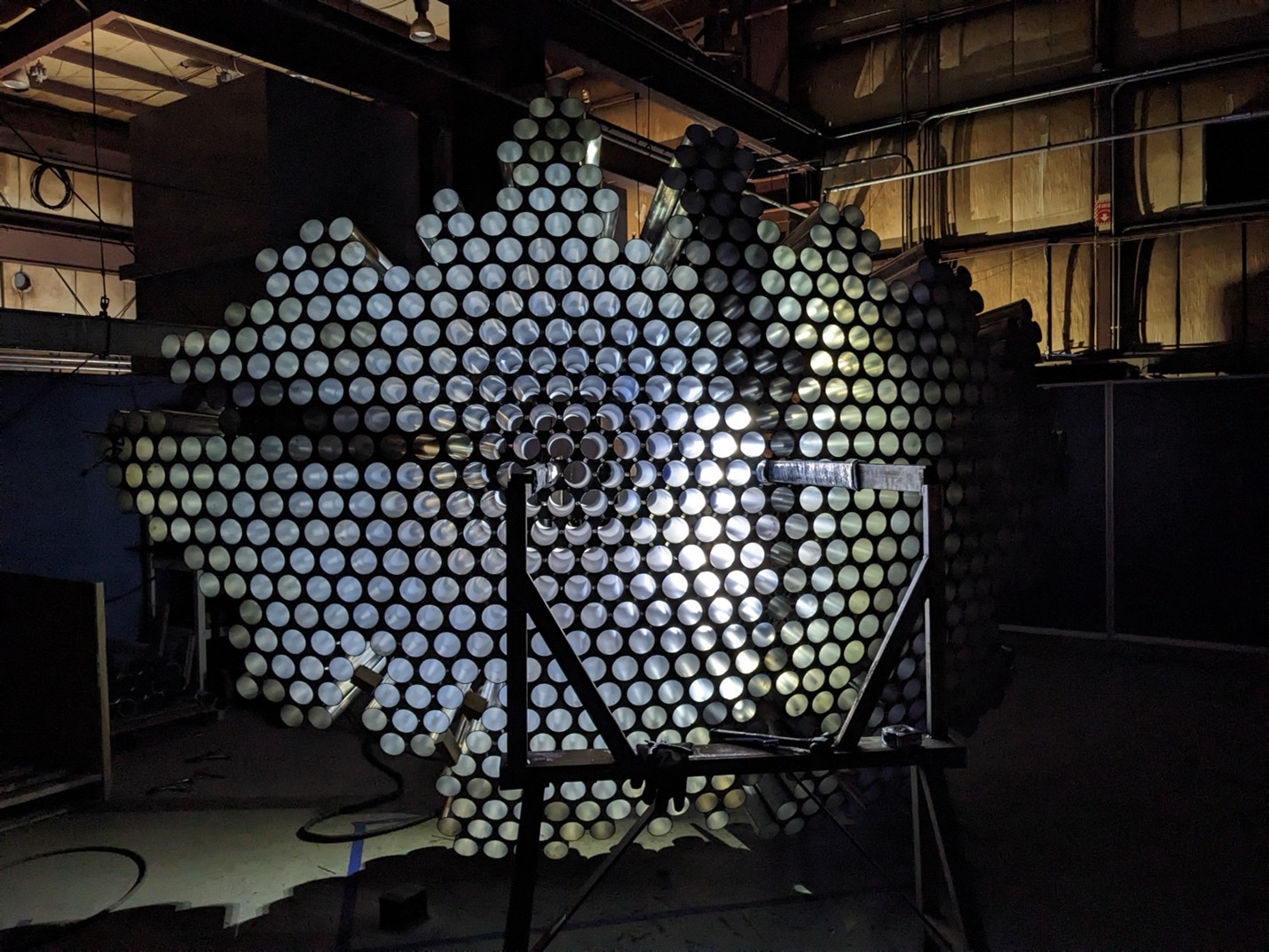
When the welding stage of the project was nearly finished, our shop power went out one day. The tube sculpture in the dark shop gave us an opportunity to play with the sculpture’s reflective lensing effects.
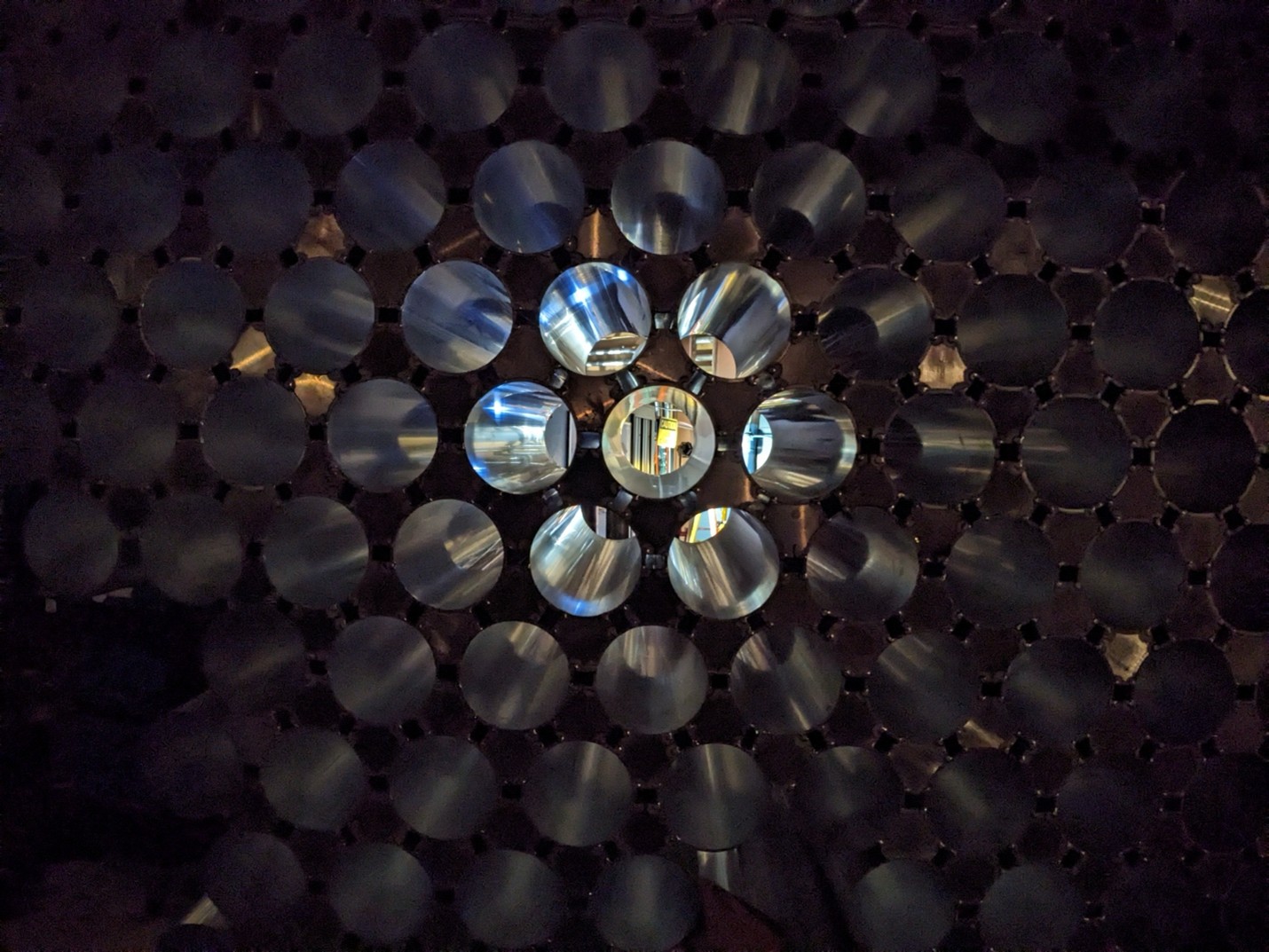
In the final stages of the build, Emil directed the placement of each tube as he fleshed out the sculpture into its final shape. He was the painter and we were the brush.
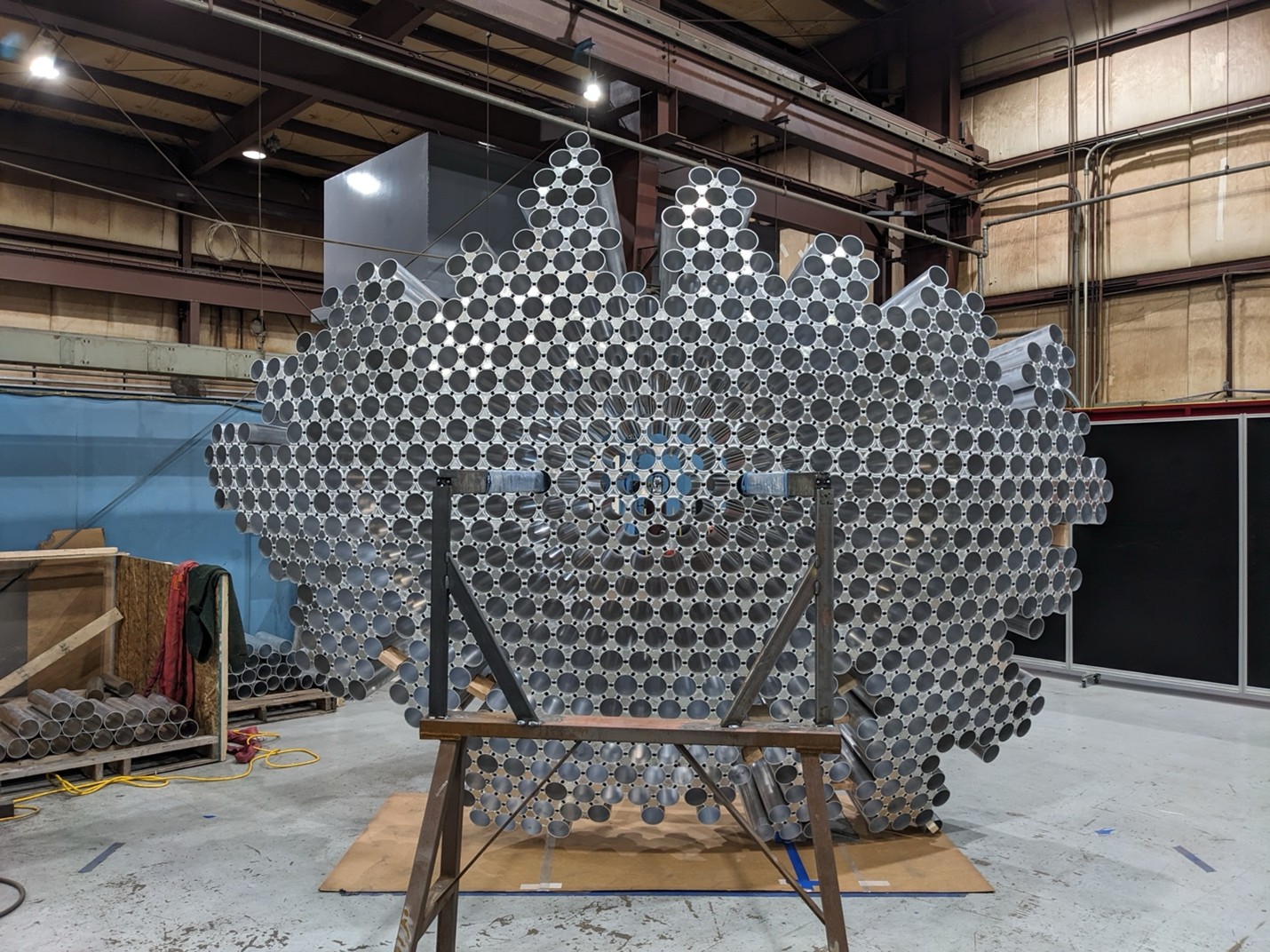
The final step for us was welding the sculpture to its base. Each tube that interacted with the base needed to be cut to fit. This gives the illusion of the sculpture disappearing into the base.
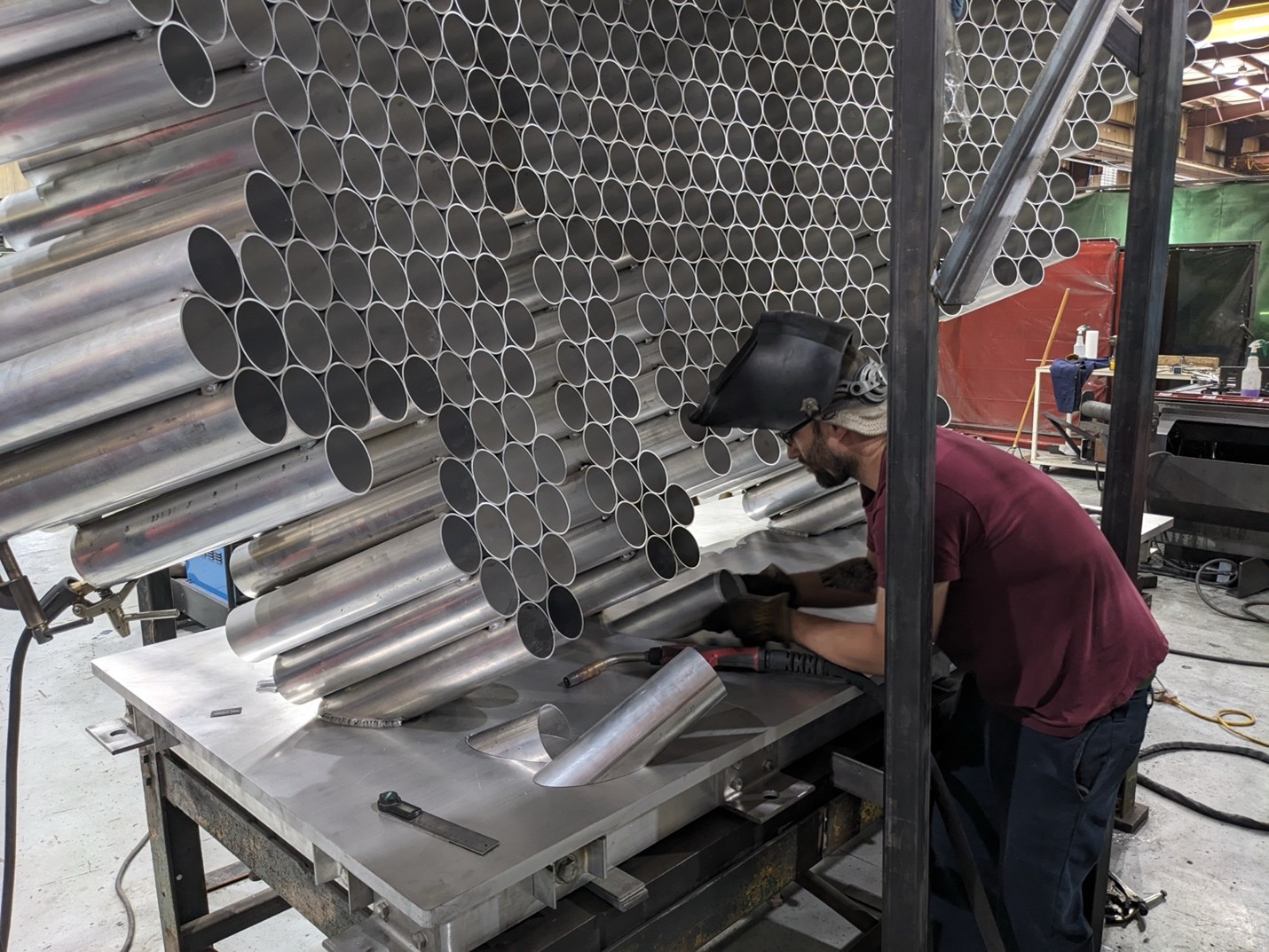
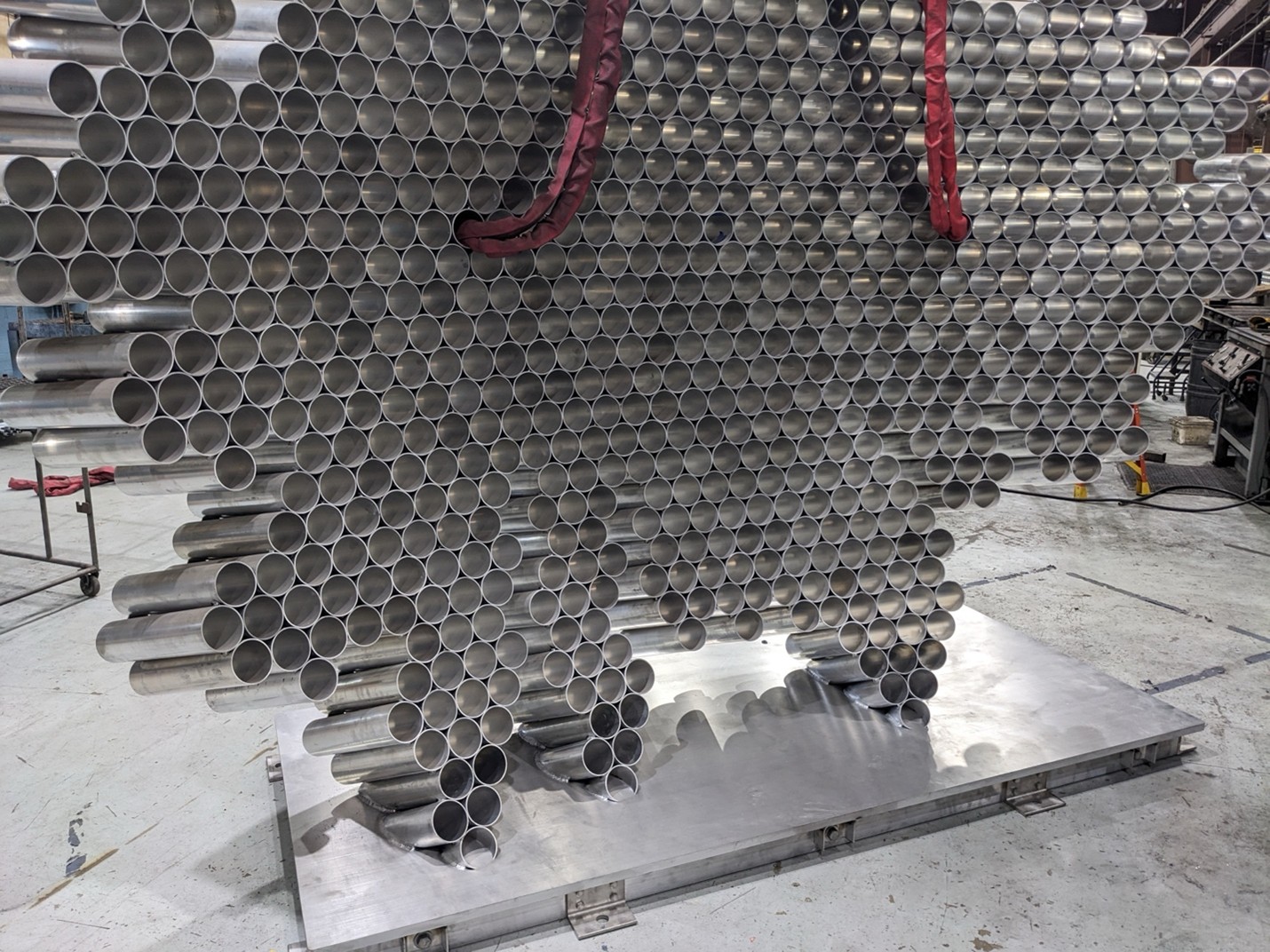
Emil put the final finishing touches on the sculpture in our shop, polishing and waxing the inside of each tube to preserve the finish.
This was a project unlike any other – a 2,100 lb., 9 ft. tall sculpture that shifts and changes or even disappears depending on your vantage point. Our constraints were not engineering specs, but Emil’s expert eye. We’re proud to have been part of such a special project!
-The crew at AquaJet